
ENTP as a Friend
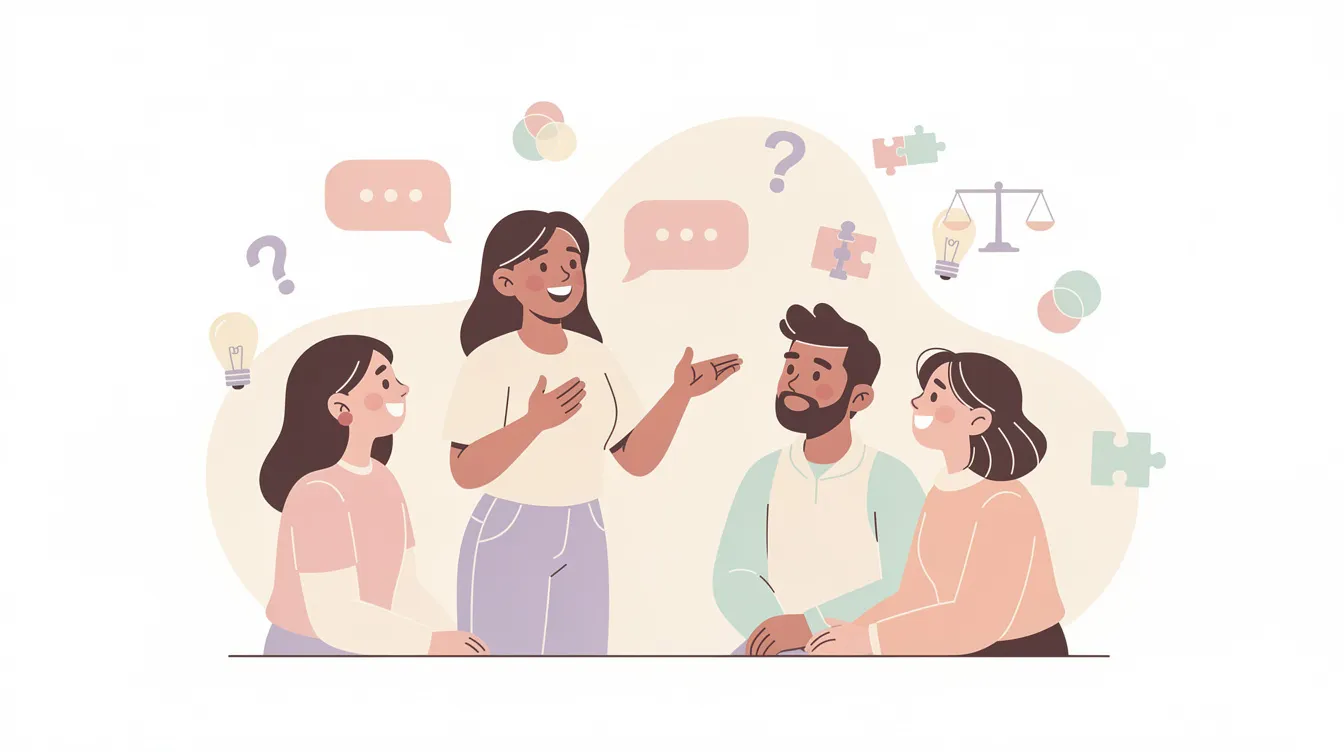
ENTPs are the friend who plays devil's advocate at every dinner party, who texts you random Wikipedia articles at midnight with "thoughts?", and who will defend a position they don't even hold just to see if you can argue back effectively. Their friendship is a constant intellectual sparring match — exhilarating if you enjoy the game, exhausting if you don't.
Having an ENTP friend means your assumptions will be challenged regularly. They're not trying to upset you — they genuinely believe that unexamined beliefs aren't worth holding. Their version of showing care is sharpening your thinking, stress-testing your arguments, and pointing out the flaw in your logic before someone less friendly does it publicly.
They're also surprisingly loyal beneath the provocative surface. The same friend who publicly disagrees with you about everything will privately go to bat for you without hesitation. They separate ideas from people completely — attacking your argument is sport; attacking YOU would be a violation they'd never commit.
How They Make Friends
ENTPs make friends through debate, shared humor, and intellectual chemistry. The moment someone pushes back on them effectively — delivers a counter-argument they hadn't considered, makes them genuinely laugh, or introduces a concept they don't already know — that person becomes interesting. And interesting is the gateway to friendship for an ENTP.
They're socially bold, approaching people who catch their attention without the gradual warm-up most types require. An ENTP might walk up to a stranger at a party and say: "I heard what you said about X and I think you're wrong. Here's why." If the stranger engages rather than retreating, a friendship may have just started right there.
Their friend groups form around intellectual communities: debate teams, startup circles, philosophy groups, comedy scenes, political organizations — anywhere that verbal sparring is the primary activity. They collect friends quickly in these environments because their energy and wit make them immediately memorable.
The challenge is depth. ENTPs form many connections quickly but sometimes struggle to deepen them past the intellectual surface. The friend who's amazing at debate might not be the friend who can sit with you through grief — and ENTPs sometimes discover this gap only when they need that deeper support themselves.
What They Value in Friendships
Intellectual combat. They need friends who can hold their own in an argument. Not people who agree with everything, not people who get offended by debate, but people who volley back with equal force and wit.
Honesty without fragility. ENTPs value people who give unfiltered feedback and can receive it in return. "Your idea has a fatal flaw and here's where" is the ENTP love language.
Humor. Quick wit, absurdist observations, dark jokes, playful roasting — humor is the social oxygen ENTPs breathe. Serious-only friendships feel suffocating.
Independence. They want friends who have their own active lives, opinions, and interests — not people who orbit the ENTP waiting for intellectual entertainment to be provided.
Openness to unconventional ideas. They explore strange intellectual territory for fun. Friends who clutch pearls at thought experiments or refuse to engage hypotheticals "on principle" are limiting companions.
Friendship Red Flags
ENTPs lose interest in friendships that involve:
- Inability to handle disagreement. If every debate ends in hurt feelings, the ENTP can't be themselves. They'll filter their thoughts, resent the restriction, and eventually leave.
- Intellectual insecurity. People who feel threatened by the ENTP's knowledge or debating style create a dynamic too fragile to sustain.
- Boring predictability. If they can predict everything you'll say before you say it, the friendship has lost its essential spark.
- Emotional demands without intellectual engagement. ENTPs can provide emotional support, but friendships that are ONLY emotional processing without any intellectual stimulation will drain them.
- Conformist thinking. People who believe things because "everyone does" or who fear holding unpopular opinions are frustrating companions for the endlessly questioning ENTP.
The ENTP exit looks like decreasing engagement. Shorter responses, fewer initiations, less enthusiasm. They won't confront you about the friendship dying — they'll just invest their intellectual energy elsewhere.
Best Friend Types
INTP — The perfect intellectual complement. INTPs provide the theoretical depth that ENTPs respect, while the ENTP's social energy draws the INTP into the world. Their debates are legendary.
INTJ — Offers strategic thinking and competence the ENTP admires. Both are direct, neither is emotionally fragile, and their conversations feel like collaborative problem-solving at the highest level.
ENFP — Matches the ENTP's social energy and idea generation while adding emotional warmth the ENTP sometimes lacks. They inspire each other creatively.
How to Be a Better Friend to an ENTP
Argue with them. Not to hurt, but to engage. When they present an outrageous position, respond with "interesting — but here's why that falls apart." They'll respect you immensely.
Don't take their devil's advocacy personally. When they argue against something you care about, they're often testing the idea — not rejecting you. Ask "do you actually believe that?" and watch them grin.
Bring them novel information. Books, podcasts, concepts, problems — anything intellectually stimulating. Being the friend who consistently introduces them to new ideas ensures your permanent place in their life.
Match their humor without being offended. The banter, the roasting, the absurd hypotheticals — this IS bonding for an ENTP. Playing along is far more connective than asking them to be serious.
Be there for the rare emotional moments. ENTPs rarely show vulnerability. When they do — when the armor cracks and something real comes through — treat it with extraordinary care.
Social Battery
ENTPs have a large social battery that charges through stimulating interaction. Boring socializing drains them; intellectually charged socializing energizes them powerfully. It's not about quantity of people but quality of exchange.
They're comfortable in various social formats — large groups, small gatherings, one-on-one — as long as the conversation is stimulating. A dinner party with sharp, funny people is paradise. A dinner party with polite, careful, surface-level conversation is torture.
Their recharging needs are moderate — a few hours of solo think-time between social events is usually sufficient. They're not deeply introverted like INTPs, but they do need space to process ideas and develop new ones before bringing them back to the social arena.
The ENTP friendship rhythm: high-frequency intellectual engagement with multiple people simultaneously, punctuated by periods of solo exploration when a new interest consumes them. They maintain friendships through shared intellectual play — sending articles, proposing thought experiments, and creating ongoing conversational threads that span weeks or months.