
ENFP as a Friend
ENFPs are the friend who makes you feel like the most fascinating person they've ever met — who asks you questions nobody else thinks to ask, who gets genuinely excited about your obscure interests, and who makes even a boring Tuesday feel full of possibility. Their enthusiasm for people is authentic, boundless, and slightly intoxicating.
They bring an almost magical quality to early friendship. New connection with an ENFP feels like falling in love platonically — intense conversations, rapid vulnerability, a sense of "where have you been my whole life?" This isn't manipulation — it's the ENFP's genuine experience. They really are that excited about you in the moment.
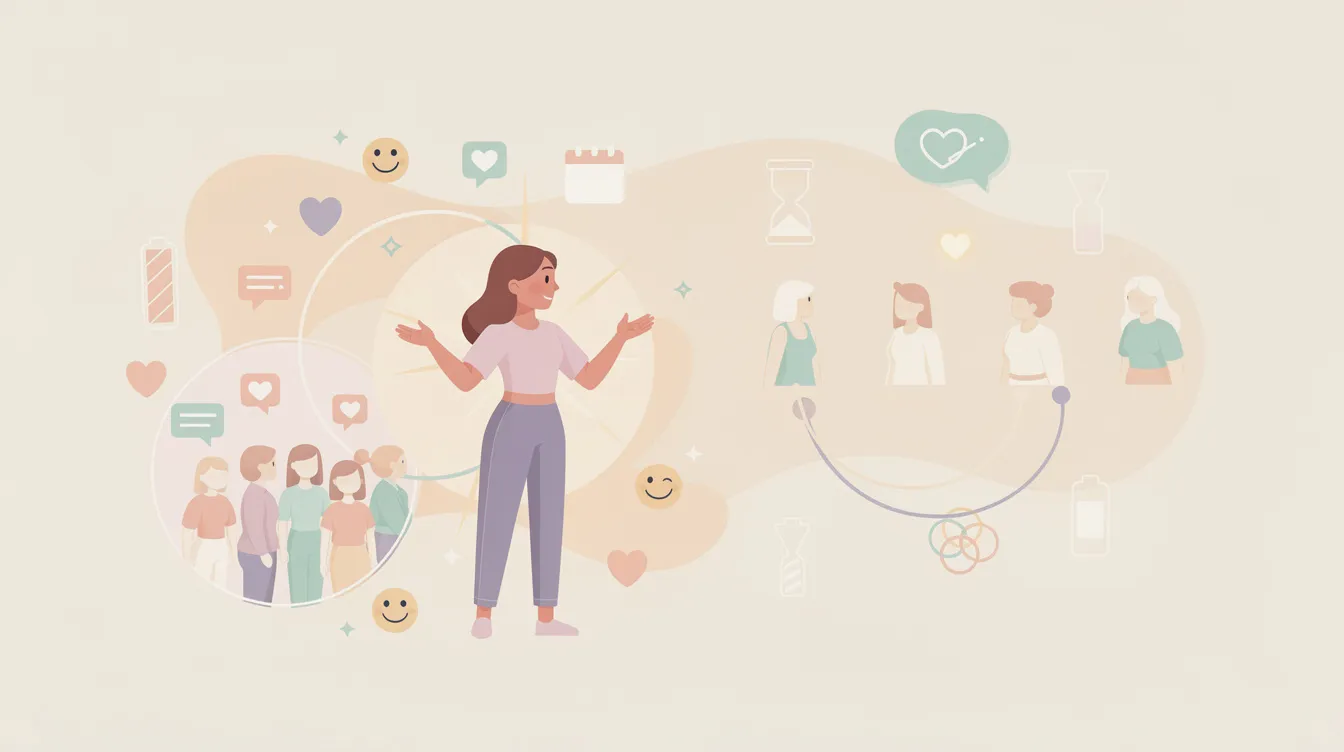
The complication: this intensity often doesn't sustain at the same level. ENFPs collect connections enthusiastically but struggle to maintain them at the depth they initially promised. The person who had three electric conversations with you might disappear for months, not from lack of caring but from being pulled toward the next fascinating human. Their friendship garden is beautiful but chronically under-tended.
How They Make Friends
ENFPs make friends with alarming speed and volume. They find connection points with virtually anyone — asking the right question, finding the unexpected shared interest, making people feel uniquely seen within minutes. A single plane ride can yield a genuine friendship. A party produces five new numbers in their phone.
Their friend-making superpower is curiosity. ENFPs ask questions that make people reveal more than they planned to — and then respond with such genuine interest that people feel validated in ways they haven't experienced in years. It's not a technique — it's how ENFPs genuinely interact with the world.
But here's the pattern they struggle with: intense beginning followed by a period of deep engagement, then gradual distraction by new connections, then intermittent reconnection, then ambiguous status. Many ENFP friendships exist in this liminal state where both people feel warmly toward each other but haven't actually spoken in eight months.
The ENFPs who mature well learn to accept this pattern rather than fight it. They can't maintain 50 deep friendships — but they can maintain 5-7 core ones while keeping the larger circle warm through periodic genuine check-ins.
What They Value in Friendships
Depth AND breadth. They want friends who can talk philosophy at midnight AND go on spontaneous adventures. Either dimension alone isn't enough — the combination is what's magnetic.
Acceptance of their intensity. ENFPs are A LOT. They know this about themselves. They need friends who genuinely enjoy their energy rather than merely tolerating it until it becomes inconvenient.
Mutual fascination. They want to be as interesting to their friends as their friends are to them. One-directional admiration where the ENFP is always the fascinated one leaves them feeling like entertainment rather than a whole person.
Flexibility. Rigid friends who need plans locked in weeks ahead, who can't handle a change of direction, or who resent the ENFP's shifting focus — these friendships create constant guilt.
Permission to be imperfect. ENFPs struggle with follow-through, reliability, and consistency. They need friends who love them despite these flaws rather than making them a constant source of conflict and guilt.
Friendship Red Flags
ENFPs pull back from friendships that feel:
- Routine and stagnant. The same bar, the same conversation topics, the same dynamics every single time. ENFPs need novelty to feel alive in any relationship.
- Emotionally restrictive. "You're too much" or "can you calm down" tells the ENFP they need to shrink themselves. They'll find someone who doesn't require dimming.
- Passive. Friends who never initiate, never suggest, never contribute creative energy leave the ENFP feeling like the entire friendship depends solely on their effort.
- Judgmental about their scattered nature. Yes, they have many interests. Yes, they start things they don't finish. Yes, they know more people than they can maintain. Constant criticism of this pattern erodes the friendship.
- Inauthentic. ENFPs can sense performance. Social climbing, name-dropping, or presenting a curated rather than genuine self will eventually drive them away.
The ENFP ending is messy because it's rarely intentional. They don't decide to end a friendship — they just gradually stop maintaining it while feeling guilty about the neglect. The friendship dies of benign neglect rather than active choice.
Best Friend Types
INFJ — The rare friend who matches the ENFP's depth while providing stability and genuine understanding. INFJs make ENFPs feel truly seen beneath all the enthusiasm — and the ENFP's energy helps the INFJ emerge from isolation.
INTJ — Provides the intellectual rigor and strategic thinking that fascinate the ENFP endlessly. The INTJ's independence means they don't suffer when the ENFP disappears briefly.
ENFP — Two ENFPs together create a friendship of mutual exploration and boundless enthusiasm. They understand each other's patterns implicitly and forgive the inconsistencies.
How to Be a Better Friend to an ENFP
Match their energy when connecting. When an ENFP reaches out after a gap, meet them with warmth rather than guilt-tripping about the silence. They already feel bad — welcoming them back is how you keep them.
Bring novel experiences. Introduce them to something new — a restaurant, an idea, a person, an activity. Novelty is how ENFPs feel loved and thought of.
Be direct about needs without ultimatums. "I'd love to hear from you more often" works well. "If you don't text me more, this friendship is over" will trigger a guilt-avoidance spiral.
Accept the cycle. ENFPs go through periods of intense connection and periods of distance. Neither phase is more real than the other. The distance isn't withdrawal — it's just their attention elsewhere temporarily.
Engage their depth. Most people only experience the ENFP's surface enthusiasm. Ask them about their fears, their doubts, their inner contradictions. Being the friend who sees past the sparkle is how you become irreplaceable.
Social Battery
ENFPs confuse people because they appear endlessly social but actually need significant alone time to function well. They're the most introverted of the extraverts — needing solitude to process, create, and recharge between social bursts.
Their battery is large but drains faster in inauthentic environments. Networking events, work parties, and situations requiring a social mask deplete them rapidly. Genuine conversations with interesting people can go on for hours without any exhaustion.
Recharging looks like: creative solitude (writing, daydreaming, exploring ideas), followed by intense social re-engagement when the battery refills. It's a boom-and-bust cycle rather than steady moderate socializing.
The ENFP friendship rhythm: bursts of intense connection with specific people, rotating through their wider circle organically, with intermittent retreat into solitary creativity. The friends who persist through the gaps — who don't punish absence or demand consistency the ENFP can't provide — become the ENFP's permanent, beloved people.